

Modern vehicles are no longer just mechanical machines; they are complex, software-defined systems powered by electronics and embedded software. Traditional automotive architectures relied on dozens of independent Electronic Control Units (ECUs), each dedicated to a specific function such as braking, infotainment, or body control. While this distributed ECU approach worked for many years, it is now struggling to keep up with the growing complexity of connected, automated, and electrified vehicles.
As software content increases and vehicle functions become more interconnected, automakers are moving toward centralized computing architectures. Centralized computing consolidates multiple vehicle functions into fewer, more powerful computing units, reducing complexity and improving system-level efficiency. This architectural shift is redefining how automotive embedded systems are designed, integrated, and validated.
At Tessolve, we support this transformation through embedded system design, validation, and integration services that help automotive teams build reliable, scalable, and future-ready computing platforms.
What Centralized Computing Means in Automotive Embedded Architectures
Centralized computing refers to an automotive architecture where multiple vehicle functions are managed by a smaller number of high-performance computing units instead of many isolated ECUs. These centralized controllers handle complex workloads such as infotainment, connectivity, advanced driver assistance, and vehicle body functions through software-driven coordination.
Unlike distributed ECU setups, where each controller operates independently, centralized systems allow functions to share processing resources and communicate through unified software frameworks. This approach improves coordination between vehicle systems and simplifies software updates and system validation.
From an embedded system design perspective, centralized computing shifts the focus from hardware-heavy architectures to software-centric platforms. It enables automotive manufacturers to build vehicles that are more adaptable, easier to maintain, and better suited for continuous feature upgrades.
How Car Gateway Modules Are Driving the Future of Smart Cars
Reasons Centralized Computing Is Reshaping Automotive Embedded Architectures
1. Reducing ECU Proliferation and Wiring Complexity
One of the most visible changes driven by centralized computing is the reduction in the number of ECUs within a vehicle. Traditional architectures may contain over a hundred ECUs, each requiring its own wiring, power management, and communication interfaces.
Centralized computing reduces this complexity by:
- Consolidating multiple functions into fewer computing units
- Minimizing wiring harness length and weight
- Simplifying network communication across vehicle systems
This streamlined architecture improves reliability and helps reduce manufacturing and maintenance challenges.
2. Enabling Software-Defined Vehicle Architectures
Centralized computing supports the shift toward software-defined vehicles, where functionality is increasingly delivered through software rather than dedicated hardware.
Key architectural benefits include:
- Centralized software management across multiple vehicle functions
- Easier implementation of updates and feature enhancements
- Improved coordination between safety, infotainment, and connectivity systems
This model aligns with modern embedded solution strategies, where software flexibility and system integration are critical to long-term vehicle evolution.
3. Improving System-Level Performance and Scalability
Centralized computing platforms provide higher processing capability compared to individual ECUs. This allows vehicles to support advanced features such as high-resolution displays, connected services, and complex control algorithms without duplicating hardware resources.
From an embedded service perspective, centralized architectures:
- Enable efficient resource sharing across functions
- Support scalable system upgrades
- Reduce redundant processing hardware
This scalability is essential as vehicle software continues to grow in size and complexity.
4. Strengthening Functional Safety and System Reliability
While centralization introduces new challenges, it also enables better system-level safety strategies when properly designed and validated. Instead of managing safety at the level of individual ECUs, centralized computing allows for coordinated safety mechanisms across multiple functions.
Effective safety design includes:
- Fault isolation within software partitions
- Redundant computing paths for critical functions
- System-level validation and stress testing
These aspects make robust embedded system design and validation essential for centralized automotive platforms.
Why Distributed ECU Architectures Are Reaching Their Limits
Distributed ECU architectures were designed for a time when vehicle functions were largely independent. Today’s vehicles demand constant communication between systems, creating integration challenges for legacy designs.
Key limitations include:
- Increasing software integration complexity
- Higher costs due to duplicated hardware resources
- Difficulties in implementing system-wide updates
- Greater effort is required for testing and validation
As these constraints grow, centralized computing offers a more practical path forward for modern automotive development.
How Centralized Computing Improves Automotive Development Efficiency
Centralized architectures simplify development by reducing the number of unique hardware platforms and enabling consistent software frameworks across vehicle functions.
This results in:
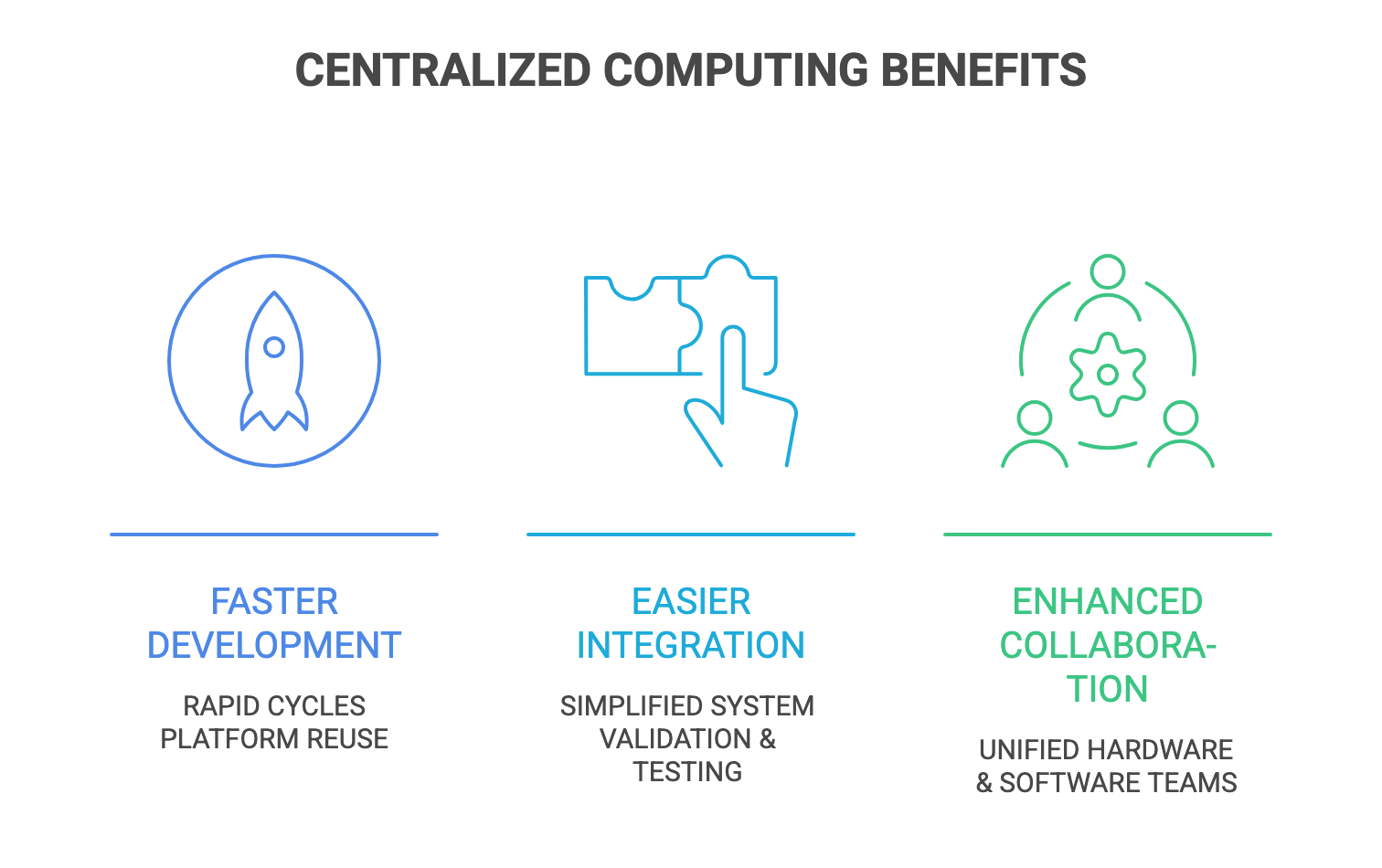
- Faster development cycles through platform reuse
- Easier system integration and validation
- Improved collaboration between hardware and software teams
For automotive manufacturers and suppliers, centralized computing helps align product development with long-term technology roadmaps. As illustrated in the diagram below, optimizing these three pillars is exactly how we help teams align with modern automotive roadmaps:
Why Tessolve Supports the Shift Toward Centralized Automotive Computing
Tessolve supports automotive manufacturers and technology providers as they transition toward centralized computing architectures. Our expertise spans embedded system design, embedded software engineering, and system-level validation, enabling us to address the complexity of modern automotive platforms.
We work closely with engineering teams to integrate embedded solutions that support centralized control, ensuring reliable communication, performance optimization, and safety compliance across vehicle systems. Our automotive capabilities include embedded software development, system integration, testing, and validation aligned with real-world operating conditions.
By offering end-to-end embedded service support, Tessolve helps transform centralized computing concepts into production-ready automotive platforms that are scalable, reliable, and future-proof.


