

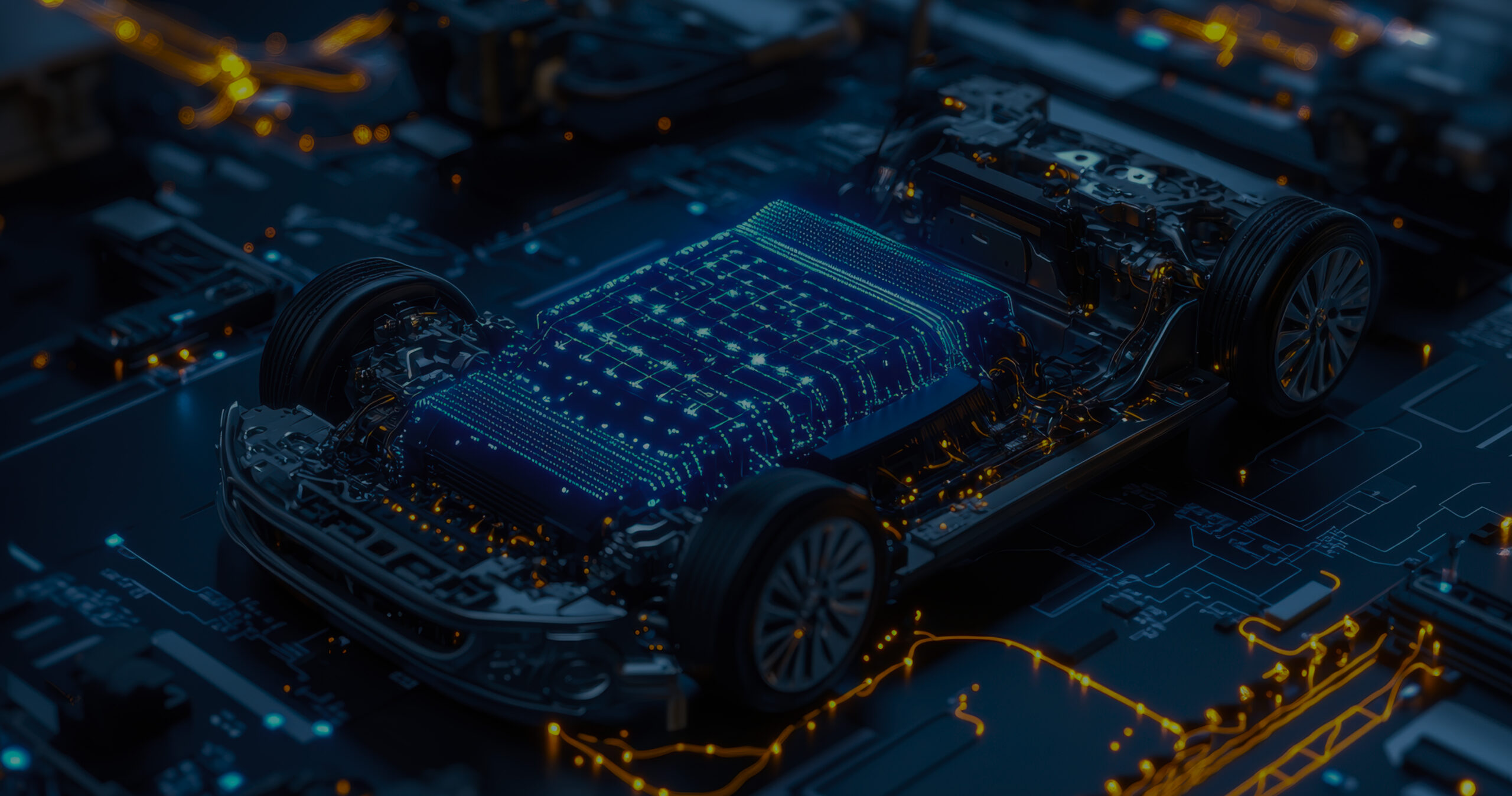
Electric vehicles are no longer just about batteries and motors. Today’s EVs are intelligent systems where software, power electronics, and control logic work together in real time. Behind every smooth acceleration, efficient charging cycle, and safe battery operation lies a complex embedded backbone managing power with precision.
As electric mobility evolves, the role of embedded intelligence in power electronics has become central. From battery management systems to traction inverters, smarter control is defining performance, safety, and efficiency. Let’s explore how embedded technologies are shaping the next generation of EV power electronics.
The Growing Intelligence Inside EV Power Electronics
Modern EVs rely on a tightly integrated electronics ecosystem where power converters, inverters, on-board chargers, and battery controllers continuously communicate to optimize energy flow. This intelligence is the result of a thoughtful embedded system design that aligns hardware capabilities with software control strategies.
Embedded controllers today must manage fast-switching devices, monitor multiple sensor inputs, and respond instantly to dynamic load changes under extreme conditions. This intelligence directly impacts vehicle range, battery life, and the overall driving experience.
To understand how these systems interact, it is helpful to visualize the “Intelligence Loop” that powers modern electric mobility. The following architecture highlights the continuous cycle of data and power:
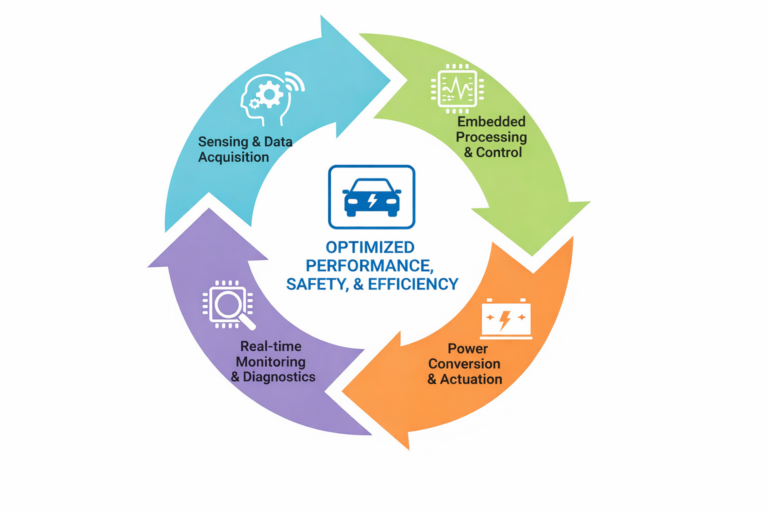
The Smarter Architecture cycle demonstrates how seamless integration between sensing, processing, and power conversion drives superior vehicle efficiency.
Why Embedded Design Matters in Electric Mobility
Embedded engineering in EVs goes far beyond coding firmware. It is about designing control systems that understand electrical behavior and react in microseconds. When teams focus on designing embedded system architectures alongside power hardware, they unlock several advantages:
- Higher energy efficiency through optimized switching control
- Reduced thermal stress on components
- Improved fault detection and system protection
- Better adaptability across driving conditions
By aligning control algorithms with real-world electrical behavior, EV manufacturers gain a competitive edge in both performance and reliability.
Smarter Architectures Driving Better EV Performance
1. Model-Based Control Strategies
Engineers increasingly use simulation-driven development to predict system behavior before hardware is finalized. This allows faster validation of control logic and smoother transitions from prototype to production.
2. Multi-Layer Safety Mechanisms
Safety is non-negotiable in EVs. Embedded controllers now use layered safety architectures that monitor voltage, current, temperature, and system health in parallel, ensuring rapid response to abnormal conditions.
3. Intelligent Thermal Management
By fusing sensor data with embedded analytics, power electronics can proactively manage heat instead of reacting to it. This protects components and improves long-term system reliability.
4. Edge-Level Diagnostics
Modern embedded controllers are capable of running diagnostics close to power stages, enabling faster detection of anomalies and reducing the risk of cascading failures.
How Domain Controllers Are Reshaping Automotive Embedded Architectures
Testing: The Foundation of Reliable EV Electronics
Even the most sophisticated designs need validation. EV power electronics must be tested under real-world stress scenarios such as voltage spikes, thermal cycling, vibration, and electromagnetic interference. Embedded-aware testing ensures that control logic behaves correctly under every possible operating condition.
From post-silicon validation to system-level reliability testing, robust test engineering bridges the gap between design intent and real-world performance.
Designing for Manufacturing and Field Reliability
Scalable EV production requires electronics that are not only intelligent but also manufacturable and serviceable. Embedded systems must support:
- Automated manufacturing processes
- In-field diagnostics and remote updates
- Modular architectures for easier servicing
These considerations reduce downtime, lower maintenance costs, and improve overall vehicle lifecycle value.
Embedded Expertise as a Competitive Advantage
As EV platforms grow more complex, the difference between success and delay often comes down to embedded expertise. Teams that master embedded system design alongside testing and validation can significantly shorten development cycles.
When designing embedded system solutions for EV power electronics, collaboration with experienced engineering partners ensures fewer design iterations, faster compliance, and smoother production ramps.
Balancing Efficiency, Safety, and Cost
EV manufacturers constantly balance performance targets with cost constraints. Smarter embedded control allows engineers to optimize system efficiency without oversizing hardware. For example, better sensing and control can reduce battery strain, extend component life, and enable more compact designs.
This holistic view of power electronics is what transforms technical capability into real-world business value.
Preparing for the Future of EV Power Electronics
Emerging trends such as wide bandgap semiconductors, compact system-in-package designs, and connected vehicle architectures are raising the bar for embedded engineering. Success in this space demands an advanced design solution mindset, one that integrates new materials, control techniques, and safety practices seamlessly.
An advanced design solution approach ensures that innovation does not compromise reliability or scalability.
Choosing the Right Embedded Engineering Partner
Selecting the right embedded system company can make or break an EV program. Ideal partners bring together hardware expertise, embedded firmware development, safety compliance, and extensive test capabilities. A trusted embedded system company acts not just as a vendor, but as a long-term engineering collaborator.
Tessolve: Engineering Confidence into EV Power Electronics
At Tessolve, we specialize in transforming complex semiconductor and embedded challenges into production-ready solutions for electric mobility. From hardware and firmware co-development to post-silicon validation and system-level testing, we provide end-to-end embedded and test engineering services tailored for automotive and EV applications.
Our global test labs, functional safety expertise, and deep understanding of power electronics enable us to accelerate development while ensuring reliability and compliance. At Tessolve, we partner with EV innovators to deliver robust, scalable, and high-performance power electronics, helping ideas move confidently from concept to the road.
Frequently Asked Questions (FAQs)
1. What is the role of embedded systems in electric vehicles?
Embedded systems control power electronics, manage batteries, monitor safety, and optimize performance in real-time within EVs.
2. How do embedded system designs improve EV efficiency?
Smart embedded designs optimize motor control, reduce heat, and balance energy usage, extending battery life and driving range.
3. Why is testing important for EV power electronics?
Testing ensures reliability under thermal, electrical, and vibration stresses, preventing failures and enhancing vehicle safety and longevity.
4. How can an embedded system company help EV manufacturers?
They provide co-design, firmware, hardware testing, and system-level validation, accelerating development and ensuring functional safety compliance.


