

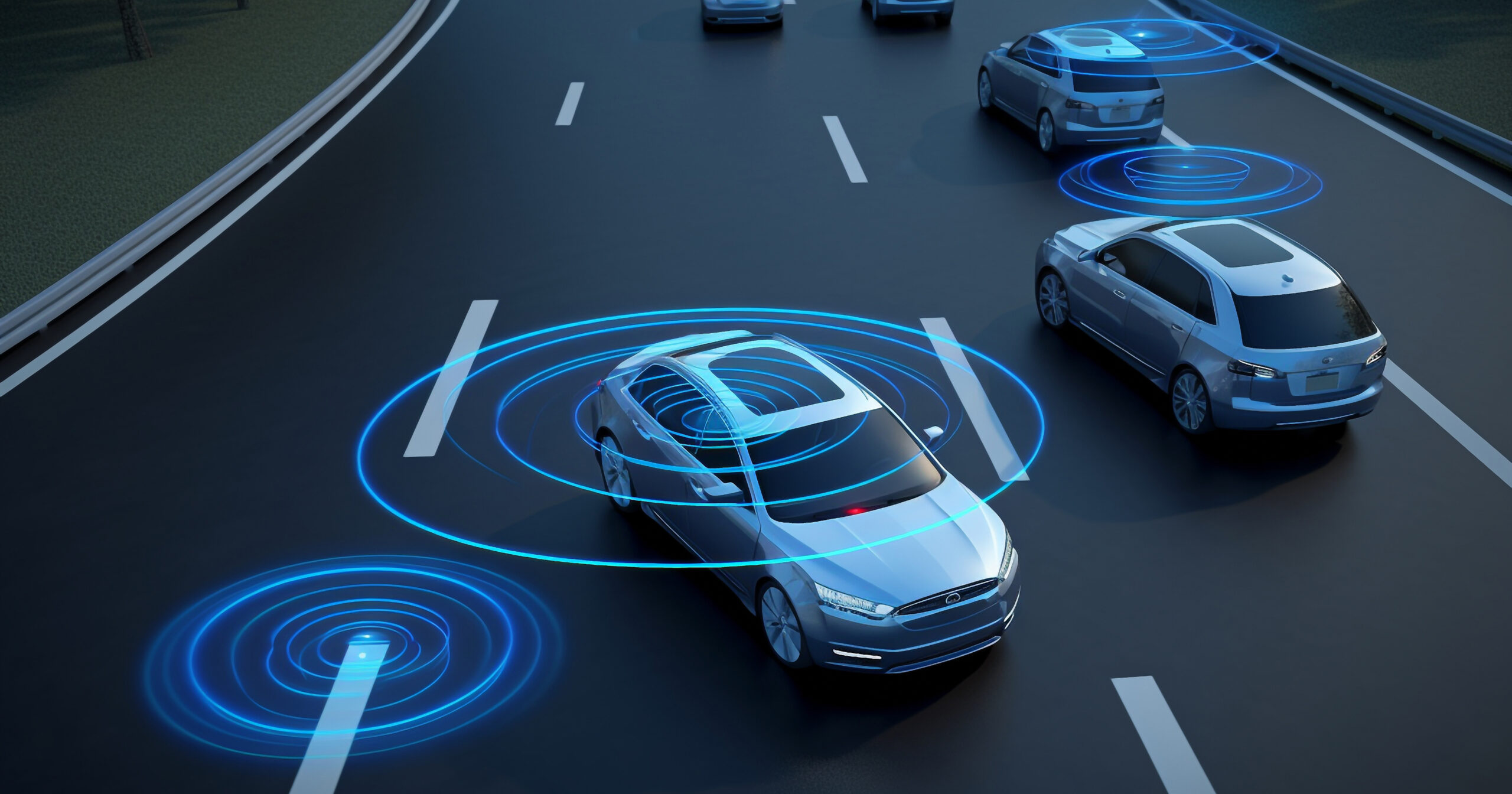
The automotive world is witnessing one of its biggest revolutions: the rise of autonomous vehicles. These self-driving machines are not only reshaping mobility but also redefining how we think about road safety. Powered by Artificial Intelligence (AI), sensor networks, and advanced computing, smart cars are designed to minimize human error, the leading cause of road accidents.
Behind this intelligence lies the intricate world of embedded technology, which enables seamless communication between sensors, controllers, and decision-making algorithms. From detecting obstacles to applying emergency brakes in milliseconds, embedded systems and AI together are making roads safer than ever.
The Safety Promise of Autonomous Vehicles
Autonomous vehicles are designed to make driving safer, smarter, and far more predictable. Instead of depending on human instincts or reaction times, these cars rely on data from multiple sensors to make accurate, real-time decisions. They can spot hazards before we do, interpret tricky traffic patterns, and respond instantly, things that even the best drivers can’t always manage.
By blending AI with reliable embedded system design, engineers are building vehicles that stay within strict safety limits, even when conditions get unpredictable. The long-term vision? To eliminate fatalities and drastically reduce human error through automation and intelligence-driven safety.
Understanding How Autonomous Safety Systems Work
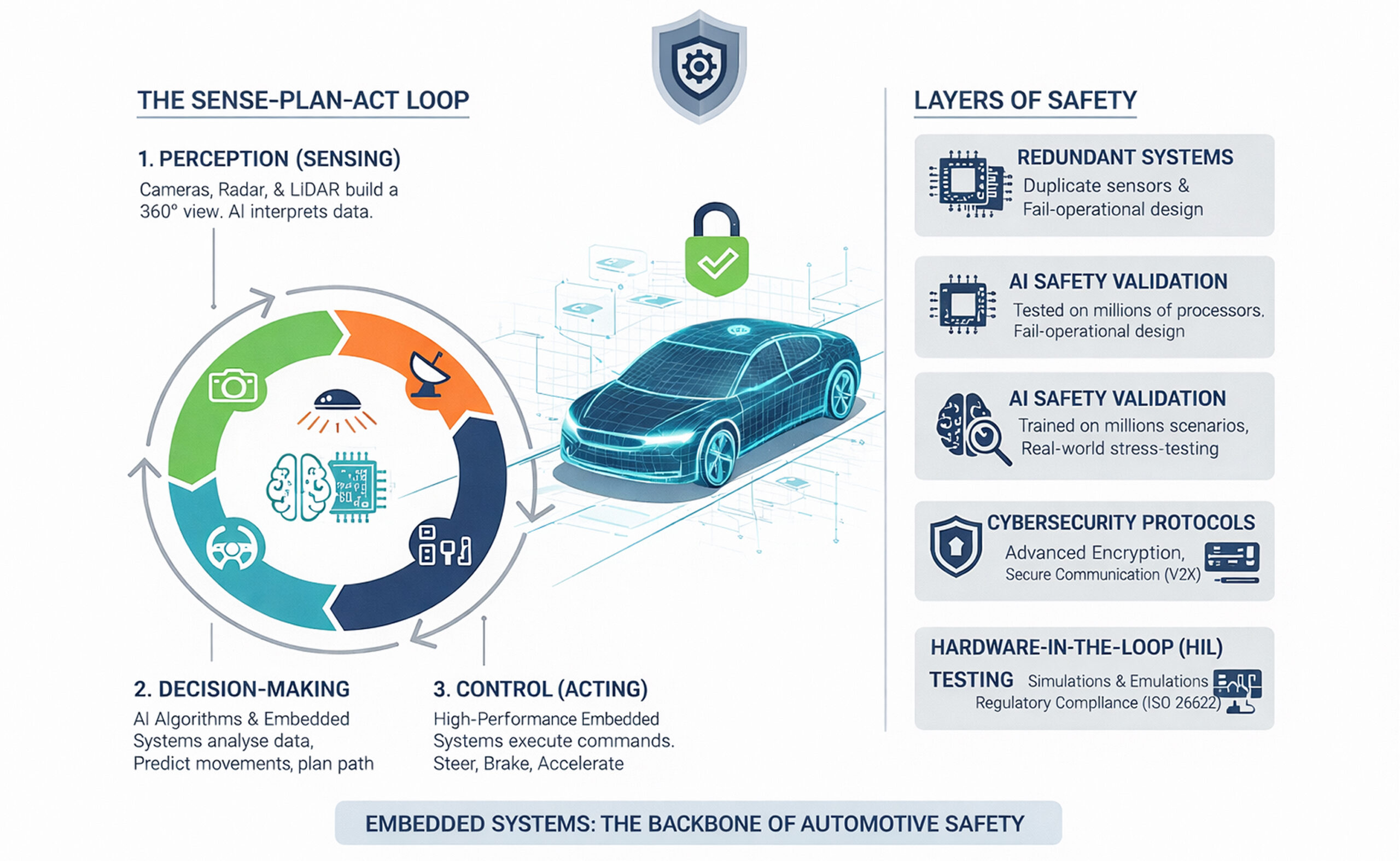
The safety of autonomous vehicles depends on three major components that include perception, decision-making, and control. Each of these relies on highly efficient embedded technology to function accurately and consistently.
1. Perception: Seeing the World
- Autonomous cars use a combination of cameras, radar, lidar, and ultrasonic sensors.
- These devices constantly monitor surroundings, identifying vehicles, pedestrians, lane markings, and obstacles.
- AI algorithms interpret this data and predict the movement of surrounding objects.
2. Decision-Making: Thinking in Real Time
- AI models process sensor inputs to make safe and optimal driving decisions.
- These models depend on real-time communication with onboard processors designed through advanced embedded system design.
- The goal is to ensure that the car reacts correctly in every possible situation, from merging traffic to sudden roadblocks.
3. Control: Acting with Precision
- Once a decision is made, control units activate braking, steering, or acceleration.
- These actions occur within microseconds, powered by high-performance embedded processors.
- Reliable embedded technology ensures that safety-critical commands are executed flawlessly every time.
Why Embedded Systems Are the Backbone of Vehicle Safety
Safety in autonomous vehicles doesn’t start with software; it starts with hardware. The sensors, control units, and processors that power these cars must be designed to work together flawlessly under all conditions.
Here’s where embedded system design plays a crucial role. Engineers integrate multiple hardware and software components to ensure real-time responsiveness, low latency, and fail-safe operation. This design guarantees that even if one system fails, backup mechanisms immediately take over.
A reliable embedded system company helps automakers build these complex safety architectures, from concept to validation, ensuring that every electronic control unit meets global automotive safety standards like ISO 26262 and AUTOSAR.
Layers of Safety Built into Autonomous Cars
Autonomous vehicles incorporate several safety layers to minimize risks and improve reliability.
1. Redundant Systems
- Duplicate sensors and processors ensure continuous operation even in the case of hardware failure.
- Multiple communication channels verify critical decisions before execution.
2. AI Safety Validation
- AI models are trained and tested across millions of driving scenarios.
- Real-world data helps systems learn how to handle unpredictable conditions safely.
3. Cybersecurity Protocols
- With connectivity comes vulnerability, so modern vehicles integrate advanced encryption and secure communication frameworks.
- Embedded technology is now built with cybersecurity at its core to prevent hacking or unauthorized control.
4. Hardware-in-the-Loop Testing
- Before production, safety systems undergo extensive simulations to evaluate performance under stress conditions.
- Collaborating with an expert embedded system company ensures accurate testing, faster development, and regulatory compliance.
Challenges and the Road Ahead
While autonomous safety technology is advancing rapidly, several challenges remain:
- Complex Environments: AI must adapt to unpredictable road conditions, from construction zones to erratic drivers.
- Ethical Decision-Making: Systems must be programmed to handle moral dilemmas in split-second decisions.
- Regulatory Compliance: Every region has different safety and testing standards.
To overcome these challenges, automakers are collaborating with leading embedded system companies and AI specialists to ensure that vehicles meet both performance and ethical expectations. Continuous updates, improved sensor calibration, and better computing efficiency will further enhance reliability and public trust.
The Future of Safe Autonomous Mobility
The future of road safety lies in the perfect harmony between AI intelligence and hardware precision. Vehicles will continue to evolve into self-learning systems capable of real-time adaptation, predictive thinking, and instant action.
With every advancement in embedded system design and artificial intelligence, we move closer to roads where accidents are rare and transportation is seamless. The integration of AI-driven safety systems backed by reliable embedded technology will define the next generation of mobility, one where vehicles protect lives before risks even appear.
Embedded Systems in Autonomous Vehicles: Architecture, Safety & Validation
Tessolve: Empowering the Next Generation of Safer, Smarter Vehicles
At Tessolve, we see safety as the heart of every autonomous innovation. With over two decades of engineering expertise, we deliver comprehensive embedded system design solutions that help shape the future of intelligent mobility. From chip design and PCB layout to firmware development and post-silicon validation, our end-to-end services ensure every system performs reliably and safely.
As a leading embedded system company, Tessolve works closely with global OEMs and Tier-1 suppliers to create secure, high-performance embedded technology for ADAS, autonomous driving, and connected vehicle platforms. Backed by advanced testing facilities and multidisciplinary teams, we help turn next-gen automotive ideas into road-ready solutions. With every design, we drive safety, intelligence, and innovation forward.
Frequently Asked Questions
How do autonomous vehicles improve road safety?
Autonomous vehicles use AI and sensors to reduce human error, detect obstacles instantly, and ensure safer driving decisions.
What role does embedded system design play in vehicle safety?
Embedded system design integrates hardware and software to enable real-time monitoring, fault detection, and rapid response for vehicle safety.
Why is embedded technology essential in self-driving cars?
Embedded technology powers intelligent sensors and processors that manage braking, steering, and navigation with precision and reliability.
How do embedded system companies enhance automotive safety?
An embedded system company develops reliable architectures and testing frameworks to ensure autonomous vehicles meet strict safety and performance standards.


