

Artificial Intelligence is transforming the vehicle from a mechanical tool into an intelligent companion that analyzes its surroundings, makes decisions, and learns from the driver’s behavior. Advances in embedded technology continue to enhance automated driving systems-from real-time decision-making to predictive diagnosis-empowering the development of smart, safer, and more efficient driving systems. Accurately embedding software to the hardware certainly sets the pace for the current shift from a mechanical, functional car to an active-thinking ‘vehicle’. It goes beyond analyzing its surroundings, making decision capabilities, and learning from driver behavior.
Understanding the Shift Toward Smarter Mobility
Car companies not only want their vehicles automated; they want them intelligent. With still-developing technology, vehicles are becoming innovative, connected ecosystems that use real-time data to make almost instant snap decisions. Everything from Adaptive Cruise Control (ACC) to independent navigation is changing through Artificial Intelligence (AI) algorithms in the way our vehicles operate in relation to their environment and individuals. The future will be determined by the designs of embedded systems, so that the hardware and software work as a machine to enable advanced computing, sensing, and decisions that bring forth safety, efficiency, and dependability on every trip.
The Evolution of Vehicle Intelligence
1. From Mechanics to Automation
- Early cars relied purely on manual control and mechanical systems.
- The advent of electrical and electronic components allowed for automation, with power steering, fuel injection, and anti-lock braking features.
- This initiated the first step toward smart mobility, a computer-assisted version of driving.
2. From Automation to Intelligence
- Today’s cars are no longer reactive; they are proactive and adaptive.
- AI algorithms interpret sensor data, identify hazards, and control the vehicle in milliseconds.
- Such intelligence is possible because of advances in embedded system design, which enables seamless communication between hardware and software modules.
The Role of AI in Modern Vehicle Technology
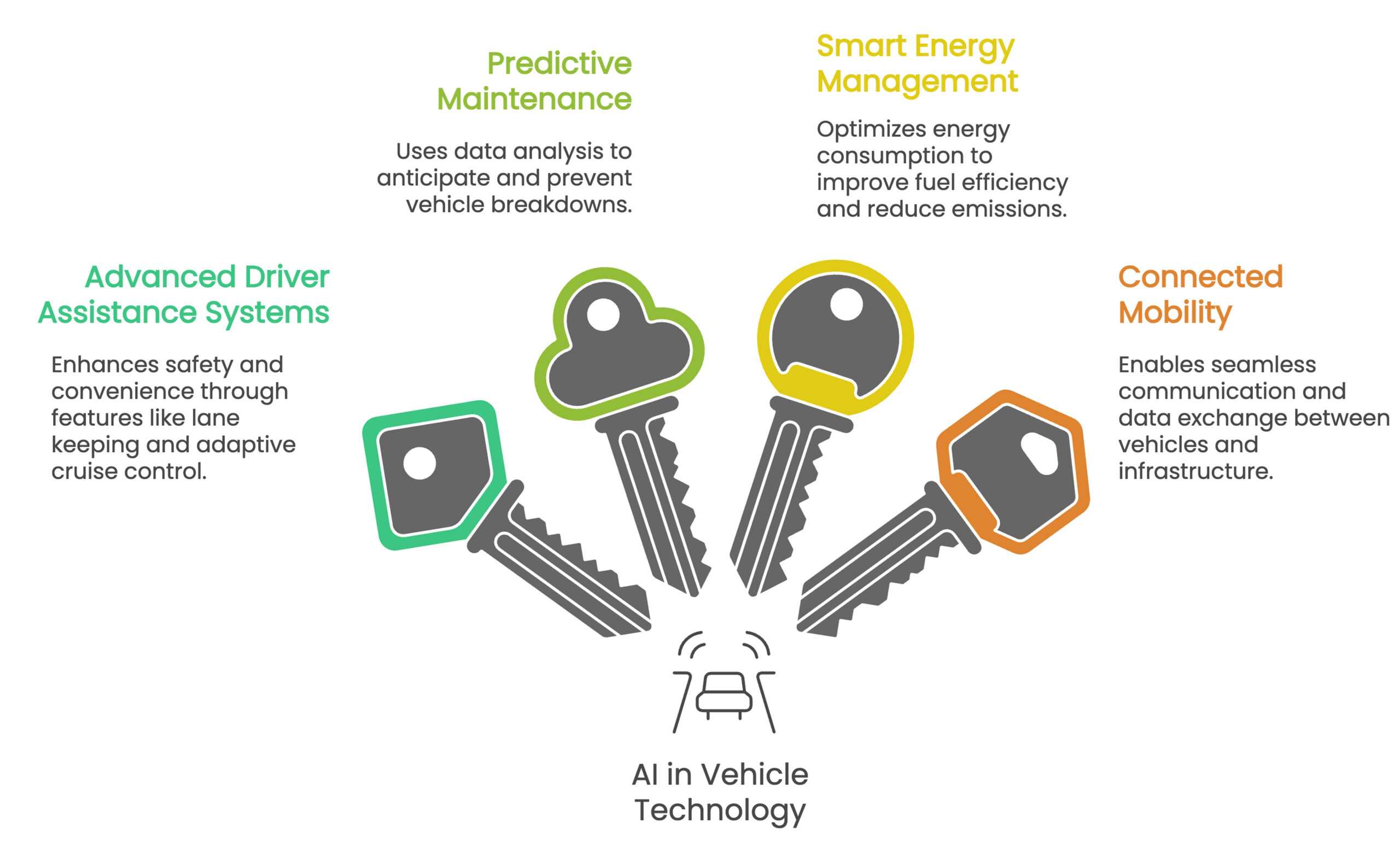
AI in automotive engineering focuses on enabling autonomy, efficiency, and safety. Below are some core areas where AI is redefining vehicle performance:
1. Advanced Driver Assistance Systems (ADAS)
AI algorithms help detect objects, maintain lane positions, and apply brakes automatically. These systems rely on embedded technology to process real-time sensor data with high precision.
2. Predictive Maintenance
AI analyzes engine performance and sensor feedback to predict potential issues before they occur, reducing breakdowns and repair costs.
3. Smart Energy Management
Electric vehicles use AI to optimize battery performance and energy recovery. Intelligent control systems ensure maximum range and safety.
4. Connected Mobility
AI-driven communication systems enable vehicle-to-vehicle (V2V) and vehicle-to-infrastructure (V2I) connectivity, improving traffic flow and safety.
How Embedded Systems Power AI in Vehicles
1. The Foundation of Smart Mobility
Behind every AI decision lies a carefully designed embedded system. From camera modules to braking actuators, embedded system design ensures all components communicate flawlessly.
2. Key Benefits of Embedded Systems in AI-Driven Vehicles
- Real-Time Processing: Rapid computation of data from multiple sensors.
- Energy Efficiency: Optimized power usage for longer component life.
- Safety & Reliability: Systems maintain performance even under extreme conditions.
- Scalability: Modular design allows updates and integration of new features.
3. Why Collaboration Matters
Working with an experienced embedded system company helps automotive brands integrate AI more effectively. These companies specialize in hardware-software co-design, validation, and compliance testing, ensuring AI functions safely in real-world environments.
Embedded Technology: The Brain Behind the Wheel
1. Real-Time Intelligence
Embedded technology allows AI models to process data locally, minimizing latency. This is essential for safety-critical applications like collision avoidance and lane keeping.
2. Edge AI Processing
Instead of sending all data to the cloud, modern vehicles process information on the edge, within embedded processors. This reduces bandwidth needs, improves responsiveness, and ensures privacy.
3. Security and Compliance
With increasing digitalization, embedded systems must also be secure. Automotive-grade encryption, firewalls, and over-the-air update mechanisms are now integral to embedded system design.
The Future: Fully Autonomous and Connected Vehicles
The next frontier in automotive technology combines AI, embedded technology, and IoT to create vehicles capable of full autonomy. Future cars will:
- Interact seamlessly with city infrastructure for optimized traffic flow.
- Update themselves automatically through secure OTA systems.
- Use AI-driven perception to make complex navigation decisions.
- Learn from each journey to improve future performance.
In this future, the line between hardware and software will continue to blur, and embedded system companies will be at the heart of that convergence.
Embedded Systems in Autonomous Vehicles: Architecture, Safety & Validation
Tessolve: Engineering Intelligence into Every Vehicle
Tessolve brings out creativity, solutions, and technical skills to give intelligence to the road for automotive brands. With more than 20 years of experience, Tessolve provides end-to-end embedded system design, PCB development, chip engineering, and system validation services that enable next-generation automotive technologies.
Tessolve has all the labs necessary for testing AI-enabled Advanced Driver Assistance Systems (ADAS), automotive software, and sensor-based systems against real-world requirements. A global embedded systems company, Tessolve supplies safe and scalable embedded technologies that empower automakers to improve safety in smarter and more connected vehicles.
By optimizing AI with strong hardware and software architecture, Tessolve is changing the way the world drives, one intelligent system at a time.
Frequently Asked Questions
How is AI transforming modern vehicles?
AI enables automation, enhances safety, predicts maintenance needs, and supports self-driving capabilities through advanced data-driven decision-making.
What is the role of embedded systems in automotive AI?
Embedded systems provide the hardware-software foundation that allows AI algorithms to process data and control vehicle functions in real time.
Why is embedded system design important in intelligent cars?
It ensures reliable, efficient communication between sensors, processors, and actuators, enabling accurate, safe, and responsive AI-driven vehicle operations.
How do embedded system companies support automotive innovation?
They develop, integrate, and validate embedded technology, helping automakers implement advanced AI solutions while meeting safety and compliance standards.


