

The Internet of Things (IoT) is no longer a future vision; it is the reality that drives billions of interconnected devices in homes, industries, and cities. From medical wearables and smart meters to autonomous cars and industrial automation, IoT has become ubiquitous. But what really fuels this enormous connectivity is not merely sensors and networks; it is the capability of embedded systems. These small, application-specific computing devices provide reliability, security, and real-time decision-making, and so are the backbone of IoT growth worldwide.
This blog discusses how embedded systems are facilitating fast growth in IoT, why they are important, and how businesses are forging the future of connected devices.
Embedded Systems: The Invisible Force Behind IoT
No matter how tiny, each IoT device requires intelligence. Embedded systems deliver that very thing. They handle data processing, hardware control, communications protocol management, and easy integration with the cloud. Without them, a connected device would be a sensor that doesn’t know how to engage in a smart way.
Well-executed embedded system design makes devices capable of performing under real-world limitations like low power use, limited bandwidth, and high security. As billions of devices become connected, this discipline of design becomes more important.
From Sensor Data to Smart Insights
IoT devices operate in layers: sensors capture raw data, embedded devices filter and process it, and cloud platforms perform big-scale analysis. People tend to underestimate the embedded layer’s role, but it’s here that critical transformations are made.
- Data pre-processing minimizes bandwidth use.
- Real-time decisions enable faster response independent of cloud delays.
- Security mechanisms guard sensitive data before transmission.
When companies collaborate with a veteran embedded system company, they can leverage established techniques that make it easier to get from prototype to scalable deployment. Such collaborations offer access to hardware, firmware, and connectivity expertise, all critical for making IoT devices reliable at scale.
Scaling IoT: Challenges and Solutions
When IoT networks expand from thousands to millions of nodes, problems compound. Firmware issues of small magnitude can cause massive failures, and inadequate security can leave entire ecosystems vulnerable to cyber attacks. This is where a strong embedded solution becomes valuable.
Such solutions normally comprise pre-tested building blocks, security architectures, and update functionality that decrease risk and time-to-market. Through the reuse of tested building blocks, organizations have the ability to develop differentiated IoT products without going around in circles.
Additionally, scaling necessitates strong testing platforms. A well-organized test strategy mimics real-world conditions, from temperature fluctuations to wireless interference, keeping devices reliable in a wide range of environments. Without this as a basis, even the most groundbreaking IoT product can falter in deployment.
Also Read: From Silent Machines to Speaking Devices: How IoT is Giving a Voice to Everyday Objects
Industry Applications Driving IoT Expansion
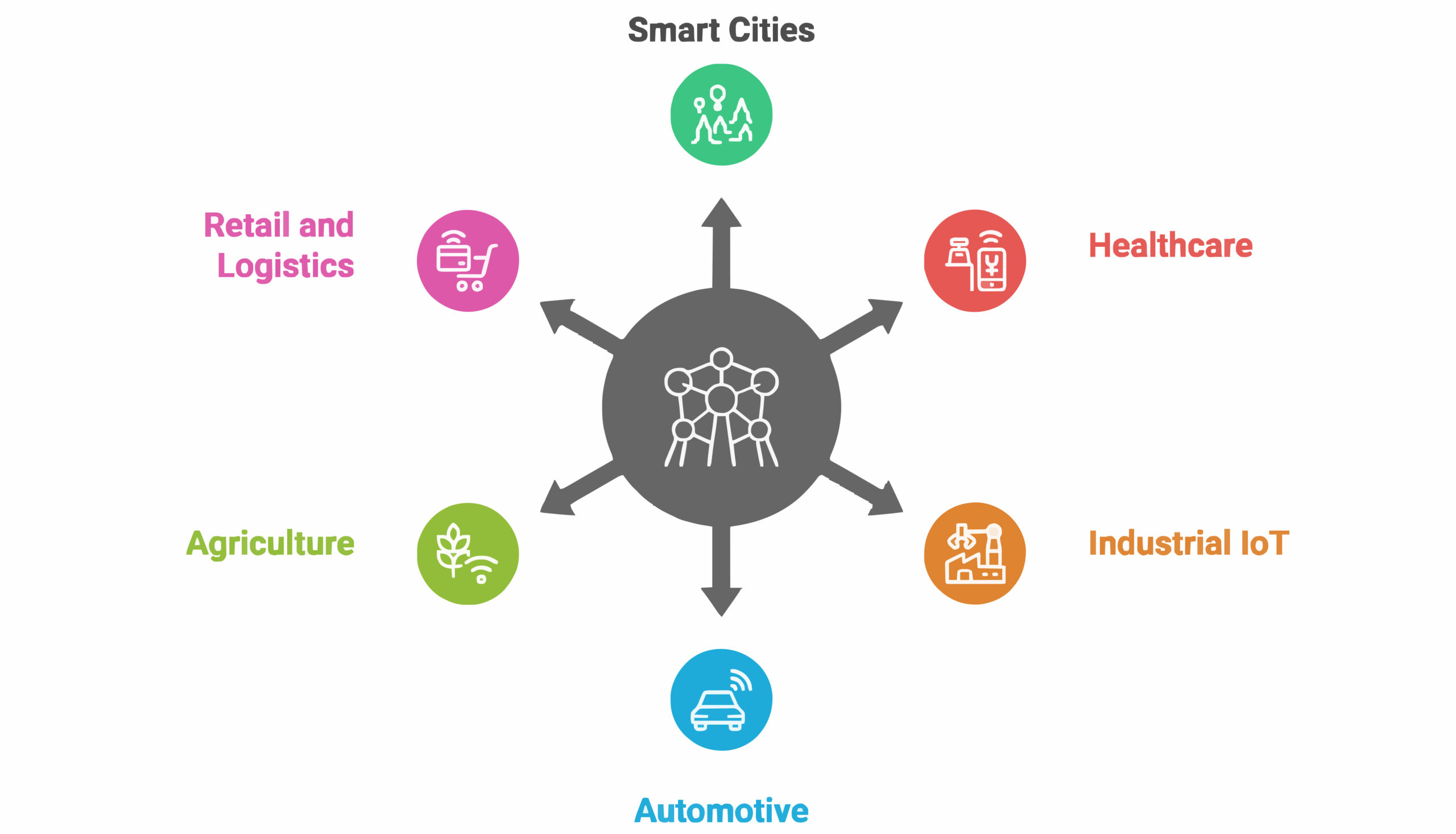
The potential of embedded systems is seen across industries:
- Smart Cities: Traffic lights, surveillance networks, and energy networks are all dependent on embedded controllers for real-time data management.
- Healthcare: Diagnostic equipment and wearables employ embedded intelligence for ongoing monitoring and secure reporting.
- Industrial IoT: Embedded rugged controllers are used in factories that ensure production lines operate efficiently and safely.
- Automotive: Everything from electric cars to autonomous driving capabilities relies on embedded systems to provide advanced capabilities at the edge.
- Agriculture: Precision agriculture equipment depends on soil sensors and automatic irrigation controlled by embedded controllers, conserving resources while enhancing yield.
- Retail and Logistics: Embedded intelligence enables smart shelves, RFID-tagged stock, and fleet tracking systems to work seamlessly.
In all instances, robust embedded system design makes the difference between proof-of-concept projects and high-scale, high-impact deployment.
Security and Reliability: Non-Negotiables for IoT
IoT expansion cannot be maintained without security. Embedded systems are at the forefront of this problem. A compromised system not only faces data loss but can also expose whole networks to malicious attacks. That is why secure boot mechanisms, encryption techniques, and hardware-based authentication have become a must-have requirement.
Reliability is just as crucial. A lot of IoT devices are placed in environments where downtime is out of the question, from patient displays in hospitals to oil rigs out in the field. Fault-tolerant design, redundancy, and safe rollback firmware mechanisms guarantee devices continue to function under unforeseen circumstances.
The Future: Smarter Devices at the Edge
IoT’s future is not just about connectivity but also about edge intelligence. The latest embedded systems are becoming powerful enough to execute machine learning algorithms directly on microcontrollers, allowing for quicker decision-making and less cloud-dependent resources. This will develop devices that are more autonomous, privacy-friendly, and responsive.
For businesses moving into this arena, selecting the correct embedded solution and technology partner will define their ability to create scalable, future-proof IoT ecosystems. Edge AI, along with next-gen embedded controllers, will enable applications such as predictive maintenance across industries, personalized health monitoring, and ultra-reliable vehicle-to-vehicle communication.
Understand More: Edge AI in Embedded Systems: Bringing AI Close to Devices
The Role of Collaboration in Global IoT Growth
Due to the intricacy of IoT ecosystems, no single organization can take this journey alone. Hardware engineers, firmware engineers, cloud architects, and system integrators will all interface in unison. It’s clear that both startups and enterprises that align with a reputable embedded systems company will gain a significant competitive edge.
The benefit of collaboration is that costs are reduced, and teams can access specialized skills and pre-qualified parts and products, and a global testing infrastructure. Most importantly, it limits the development cycle and increases the odds of succeeding in volume production. Time-to-market is fast becoming the most important factor in gaining market share, with this structure becoming a must-have.
Tessolve: Enabling IoT with Proven Embedded Expertise
At Tessolve, we are experts in transforming IoT ideas into market-ready products. With hands-on experience ranging from hardware engineering to firmware development and system integration, we provide end-to-end embedded solution offerings, minimizing complexity and risk. Global labs of compliance testing, validation, and lifecycle support ensure all designs are production-ready.
As a reliable embedded system company, we marry innovation with proven embedded system design methods to expedite product development. From low-power wireless devices to edge AI platforms, Tessolve enables organizations to confidently connect billions of devices, reliably and at scale.


