

What if your vehicle could continuously improve through software updates long after you bought it? That is exactly the promise of Software-Defined Vehicles (SDVs). As automotive systems become more connected and intelligent, the traditional approach of tightly coupling hardware and software is no longer sufficient.
Modern vehicles integrate advanced features such as connectivity and driver assistance systems. However, legacy architectures still tie software directly to hardware, making upgrades complex and slowing innovation.
Decoupling hardware and software is emerging as the key to unlocking SDV potential. By separating software logic from hardware dependencies, manufacturers can enable faster updates, improved scalability, and better system performance. Achieving this requires strong embedded system design and an advanced design solution approach that supports flexibility and long-term adaptability.
Understanding Decoupling in Software-Defined Vehicles
Decoupling hardware and software refers to separating software functionality from specific hardware components so that applications can run independently across different platforms. In traditional automotive systems, each function was tied to a dedicated control unit, which created rigid and fragmented architectures.
In contrast, SDVs rely on centralized computing systems where multiple functions run on shared hardware platforms. Software layers communicate with hardware through abstraction layers, enabling flexibility and easier updates. This shift allows engineers to modify or upgrade software without making changes to the underlying hardware.
This approach is closely aligned with modern embedded system design, where modularity and scalability are essential. By decoupling components, manufacturers can improve performance, reduce complexity, and build more adaptable systems.
Why Decoupling Hardware & Software is Critical for SDV Success
As vehicles evolve into software-driven platforms, decoupling becomes essential for enabling innovation and efficiency.
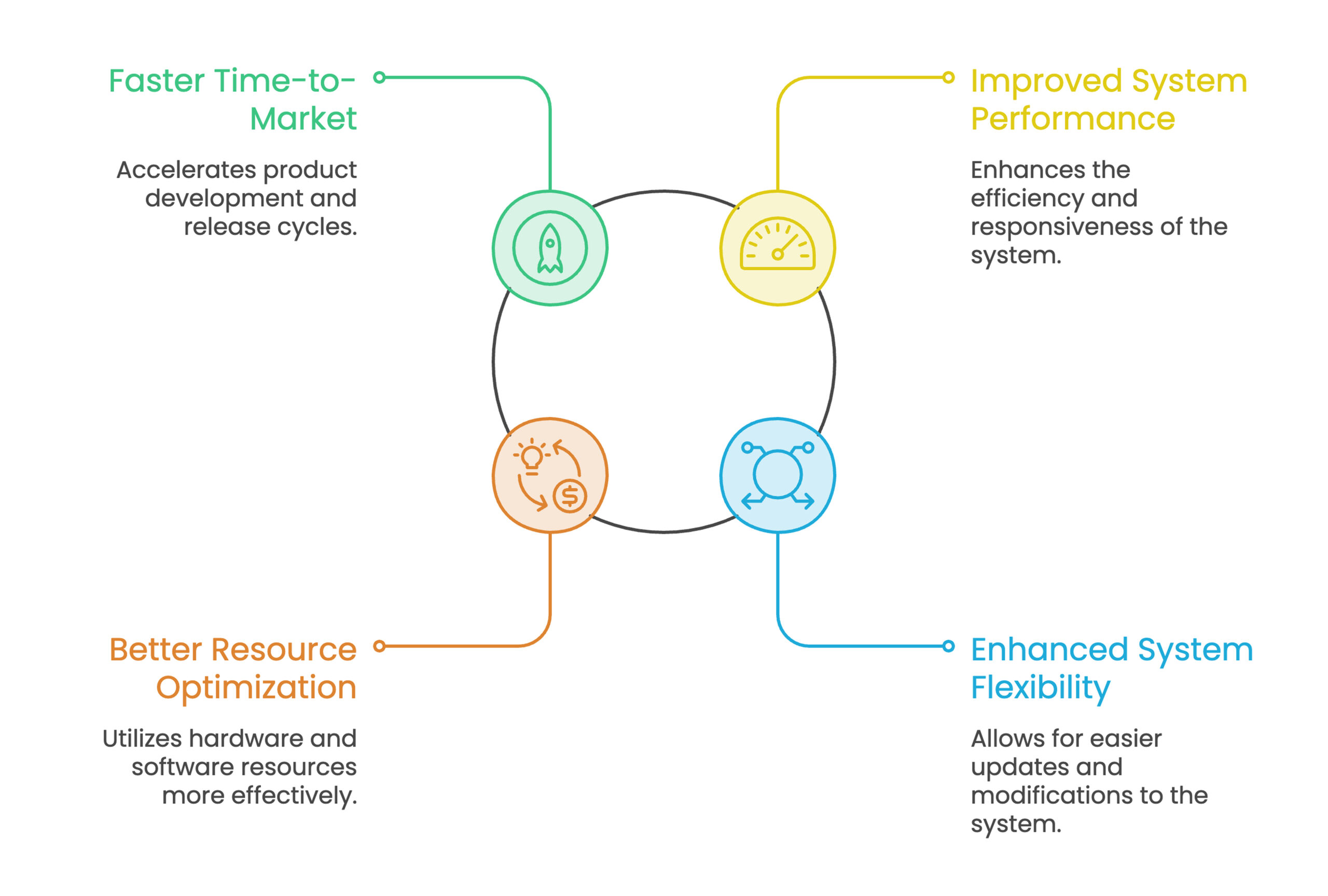
1. Faster Time-to-Market
When hardware and software are developed independently, delays in one area can slow down the entire process. Decoupling allows parallel development, reducing dependencies and accelerating product timelines.
- Parallel hardware and software development
- Early validation of system functionality
- Reduced integration delays
- Faster product releases
2. Improved System Performance
Decoupling allows engineers to allocate tasks more efficiently between hardware and software, improving system performance.
- Hardware acceleration for intensive tasks
- Optimized software execution
- Efficient processor utilization
- Reduced latency
3. Better Resource Optimization
A decoupled architecture ensures efficient use of system resources, including memory and power.
- Optimized memory usage
- Efficient power management
- Balanced workload distribution
- Reduced system overhead
4. Enhanced System Flexibility
Decoupled systems can easily adapt to new requirements and technologies.
- Easier feature updates
- Scalability across platforms
- Simplified hardware upgrades
- Long-term system adaptability
Challenges in Decoupling Hardware and Software
Despite its advantages, decoupling introduces several challenges. One of the main issues is managing system complexity. Multiple layers, such as middleware, abstraction layers, and communication protocols, must work together seamlessly, requiring expertise in embedded system design.
Ensuring compatibility across hardware platforms is another challenge, as software must maintain consistent performance across configurations. Security and debugging also become more complex in connected systems, requiring specialized tools and embedded engineering expertise. Working with an experienced embedded system company helps address these challenges effectively.
Architectural Foundations for Decoupling
A strong architecture is essential for successfully decoupling hardware and software in embedded systems.
1. Hardware Abstraction Layer (HAL)
The Hardware Abstraction Layer acts as a bridge between hardware and software, allowing software to interact with hardware without knowing its internal details.
- Enables hardware-independent software
- Simplifies firmware development
- Improves portability
- Supports scalability
2. Centralized Architectures
Modern SDVs use centralized computing units to manage multiple vehicle functions, reducing system complexity and improving efficiency.
- Reduced hardware components
- Faster communication between systems
- Improved scalability
- Easier integration of new features
3. Middleware and Service-Oriented Design
Middleware enables communication between software layers, while service-oriented architecture breaks functionalities into modular services.
- Improved system modularity
- Flexible software deployment
- Simplified integration
- Scalable system frameworks
4. Virtualization Technologies
Virtualization allows multiple software environments to run on shared hardware platforms.
- Efficient resource utilization
- Improved system isolation
- Enhanced flexibility
- Strong foundation for an advanced design solution
Key Strategies for Decoupling Hardware and Software
Implementing decoupling requires practical engineering strategies that align hardware and software development.
1: Modular Software Development
Breaking software into independent modules allows easier updates and scalability.
- Reusable components
- Independent feature development
- Reduced dependencies
- Faster deployment
2: API-Driven Architecture
Standardized APIs enable seamless communication between hardware and software components.
- Clear interface definitions
- Improved interoperability
- Simplified integration
- Scalable system design
3: Continuous Integration and Deployment
Modern development practices support faster updates and improved quality.
- Automated testing
- Frequent software updates
- Faster bug resolution
- Improved system reliability
4: Cross-Team Collaboration
Effective communication between hardware and software teams is critical for successful decoupling.
- Shared development tools
- Unified workflows
- Faster issue resolution
- Improved system alignment
Driving SDV Innovation with Embedded Engineering Expertise
The transition to Software-Defined Vehicles requires advanced engineering capabilities that combine hardware design, firmware development, and system integration. Organizations must adopt integrated approaches to designing embedded system architectures that support scalability and performance.
Tessolve brings deep expertise in embedded system design, helping organizations build flexible and future-ready platforms. With capabilities in hardware design, firmware development, and validation, Tessolve delivers reliable and scalable engineering outcomes tailored to modern automotive needs.
As a trusted embedded system company, Tessolve provides end-to-end embedded service offerings, including system architecture design, hardware-software integration, and testing. By leveraging an advanced design solution approach, Tessolve enables organizations to accelerate innovation and successfully implement decoupled SDV architectures.
Sensor Fusion in Autonomous Vehicles: The Role of Embedded Systems
Frequently Asked Questions (FAQs)
1. What does decoupling hardware and software mean in SDVs?
Decoupling means separating software functionality from specific hardware components. This allows software to run independently across different platforms, enabling easier updates, improved scalability, and faster innovation in software-defined vehicle architectures without requiring frequent hardware changes.
2. Why is decoupling important for modern vehicles?
Decoupling enables faster feature updates, better scalability, and improved system performance. It allows manufacturers to deploy software enhancements without modifying hardware, making vehicles more adaptable, efficient, and capable of evolving over time through updates and new functionalities.
3. What role does embedded system design play in SDVs?
Embedded system design ensures efficient interaction between hardware and software components. It enables scalable architectures, supports real-time processing, and provides the foundation for implementing decoupled systems that can adapt to changing requirements in modern automotive platforms.
4. What are the key challenges in decoupling hardware and software?
Challenges include managing system complexity, ensuring compatibility across hardware platforms, maintaining system security, and debugging across multiple layers. These require structured development processes, advanced tools, and strong engineering expertise to ensure consistent and reliable system performance.
5. How can an embedded system company support SDV development?
An embedded system company provides expertise in hardware design, firmware development, and system integration. It helps organizations implement decoupled architectures, optimize system performance, and reduce development risks through comprehensive embedded service capabilities and engineering support.


