

Renewable energy has changed the rules of power generation. Unlike traditional plants that deliver predictable output, solar and wind energy fluctuate constantly. Smart grids were created to handle this complexity, but they wouldn’t function without embedded systems working quietly in the background.
Instead of talking abstractly about technology, let’s focus on how embedded systems actually optimize renewable energy inside smart grids. From real-time sensing to autonomous decision-making, these systems act as the grid’s intelligence layer, ensuring renewable power is used efficiently, reliably, and safely.
Why Smart Grids Need Embedded Intelligence to Optimize Renewables
Renewable energy behaves very differently from traditional power sources. Solar output shifts with cloud movement, wind generation varies minute by minute, and consumer demand rarely follows a fixed pattern. Smart grids are designed to handle this complexity, but without embedded intelligence, they would function mainly as monitoring systems rather than adaptive networks. Embedded systems enable smart grids to sense conditions, make decisions, and act in real time. Intelligence is distributed across meters, inverters, substations, and controllers instead of relying only on centralized control. This decentralization allows faster responses to renewable variability, minimizes congestion, and improves energy efficiency. At scale, embedded automation transforms renewables into reliable, grid-ready power sources.
Key Ways Embedded Systems Optimize Renewable Energy in Smart Grids
1. Real-Time Energy Monitoring at Every Grid Node
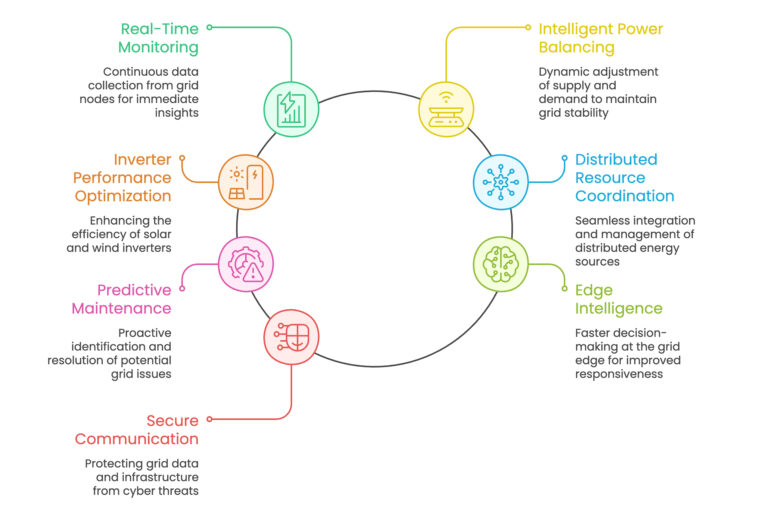
One of the most fundamental ways embedded systems optimize renewable energy is through continuous, real-time monitoring.
Embedded controllers are deployed across smart meters, substations, inverters, transformers, and generation sites. These systems constantly measure voltage, current, frequency, temperature, and load conditions. With optimized embedded system design, these devices can process data locally instead of waiting for centralized commands.
This real-time visibility allows grid operators to:
- Track renewable generation output instantly
- Detect underperformance in solar panels or wind turbines
- Identify power losses or abnormal fluctuations early
Without this embedded intelligence, renewable variability would remain largely unmanaged.
2. Intelligent Power Balancing Between Supply and Demand
Renewable optimization isn’t just about producing power; it’s about balancing it.
Embedded systems play a critical role by running control algorithms that dynamically match energy supply with real-time demand. When renewable generation spikes or drops suddenly, embedded controllers automatically respond by adjusting inverter behavior, rerouting power, or activating energy storage systems.
This approach to designing embedded system architectures ensures:
- Stable grid frequency despite intermittent generation
- Reduced reliance on fossil-fuel backup plants
- Faster response times compared to manual or cloud-only systems
These control loops operate in milliseconds, making the grid responsive rather than reactive.
3. Optimizing Solar and Wind Inverter Performance
Inverters act as the gateway between renewable sources and the grid. Embedded firmware inside these inverters directly impacts how efficiently energy is converted and delivered.
Modern embedded systems:
- Track maximum power points (MPPT) in solar arrays
- Adjust wind turbine output based on wind speed and grid conditions
- Maintain voltage and frequency compliance automatically
This level of control depends heavily on reliable embedded system design, where hardware stability and real-time software performance are equally critical. Even small efficiency gains at the inverter level translate into massive energy savings at the grid scale.
4. Enabling Distributed Energy Resource Coordination
Smart grids rely on Distributed Energy Resources (DERs) such as rooftop solar, EV chargers, microgrids, and battery storage units. Embedded systems act as local coordinators for these assets.
Instead of sending every decision to a central control room, embedded controllers:
- Decide when batteries should charge or discharge
- Coordinate EV charging to avoid peak loads
- Manage microgrid islanding during outages
This decentralized intelligence is a practical, advanced design solution that improves grid resilience while reducing communication overhead and latency.
5. Predictive Maintenance Through Embedded Diagnostics
Another powerful method of optimization is predictive maintenance.
Embedded systems continuously monitor equipment health by tracking parameters such as thermal stress, vibration, and electrical anomalies. Over time, this data helps identify patterns that signal future failures.
With embedded analytics, utilities can:
- Schedule maintenance before breakdowns occur
- Extend the life of renewable assets
- Reduce downtime and operational costs
This approach shifts renewable infrastructure from reactive repairs to proactive optimization, a major operational advantage.
6. Edge Intelligence for Faster Decision-Making
Instead of relying solely on cloud computing, modern smart grids push intelligence closer to the source, the edge.
Embedded systems now support local data processing and decision-making. This means:
- Immediate fault detection and isolation
- Faster grid recovery during disturbances
- Continued operation even during communication failures
Edge intelligence represents a practical, advanced design solution that ensures renewable power remains reliable under real-world conditions, including network delays or outages.
7. Secure Communication and Grid Protection
As grids become smarter, they also become more vulnerable to cyber threats. Embedded systems play a crucial role in securing renewable energy infrastructure.
Through encrypted communication, secure boot mechanisms, and authentication protocols, embedded controllers protect:
- Smart meters from tamper-proof
- Grid communication channels from intrusion
- Renewable generation assets from unauthorized control
A capable embedded system company understands that optimization isn’t just about efficiency; it’s also about security and long-term trust in the grid.
Designing Embedded Systems to Meet ASIL Safety Requirements
How Tessolve Supports Embedded Innovation in Smart Grids
At Tessolve, we engineer embedded solutions that enable smarter, more efficient renewable energy systems. From hardware architecture to firmware development and system validation, we deliver end-to-end capabilities tailored for energy-critical applications. Our expertise spans real-time embedded software, power electronics, connectivity, and product lifecycle support, ensuring reliability in demanding grid environments.
As a trusted embedded system company, Tessolve helps energy innovators accelerate deployment with scalable platforms built for performance, security, and compliance. Whether optimizing inverter control, enabling intelligent edge devices, or developing next-generation smart grid solutions, Tessolve partners with clients to transform complex energy challenges into future-ready engineering outcomes.
Frequently Asked Questions (FAQs)
1. How do embedded systems improve renewable energy efficiency in smart grids?
Embedded systems enable real-time monitoring, automated control, and fast response to renewable energy fluctuations across the grid.
2. Why are embedded systems critical for managing solar and wind power?
They handle variability by balancing supply and demand, optimizing inverter performance, and maintaining grid stability automatically.
3. What role do embedded systems play in smart grid reliability?
They support predictive maintenance, fault detection, secure communication, and localized decision-making to prevent outages and downtime.
4. Can smart grids function effectively without embedded systems?
Without embedded systems, smart grids would lack real-time intelligence, automation, and efficient renewable energy integration capabilities.


