


The complexity of aerospace and automotive systems is significantly increasing. From Advanced Driver Assistance Systems (ADAS) in cars to flight-control electronics in aircraft, these mission-critical systems must operate flawlessly under extreme conditions. There’s zero tolerance for failure. That’s why high-reliability testing is not just a best practice; it’s a must-have cornerstone for product quality and safety.
In this blog, we’ll unpack what high-reliability testing really means for aerospace and automotive electronics. We’ll explore why it’s essential and how engineers are pushing the boundaries of testing technology to safeguard reliability, all while maintaining performance and regulatory compliance.
What Is High-Reliability Testing and Why It Matters
High-reliability testing refers to rigorous validation processes that go beyond typical verification steps. In industries like aerospace and automotive, you’re designing electronics that must withstand harsh environments, from vibration and temperature extremes to electrical noise and long lifecycles. A device might be expected to function reliably for years with little or no maintenance.
Whether it’s a flight navigation system or a vehicle’s braking sensor, reliability testing mimics the stresses experienced in real-world situations. This assures engineers, manufacturers, and end users that the product will do its job without fail.
Key reliability tests include:
- Thermal cycling and temperature shock
- Vibration and shock exposure
- Humidity and corrosion resistance
- Long-term aging and stress tests
All of this simulates the demanding environments these systems face during deployment.
The Role of Test Strategy in Critical Electronics
Crafting an effective test strategy involves far more than pressing “start” on a testing rig. It requires thoughtful planning from initial concept through production.
That’s where test engineering shines, a discipline that blends technical expertise with strategic insight. Good test engineering ensures the right tests are applied at the right points in the product lifecycle. Early testing catches design issues quickly, reducing risk and cost later on. Later stages focus on qualification and certification needed to meet international standards.
For mission-critical applications, test plans often integrate both hardware and software checks, including functional tests, environmental stress tests, and system-level assessments that replicate field conditions.
One example is designing tests that simulate extreme cold at high altitudes for aerospace electronics, or long-term heat cycling in automotive systems that operate in desert climates. These tests help reveal weaknesses that typical development tests might miss.
ATE Testing: Precision at Every Stage
Automated Test Equipment (ATE) has revolutionized the way devices are validated and qualified. ATE testing platforms automate the execution of complex test sequences with high accuracy and repeatability. In aerospace and automotive electronics, ATE systems play a pivotal role, especially when dealing with high-volume production and sophisticated components like SoCs, microcontrollers, and sensors.
State-of-the-art ATE platforms can handle:
- Digital, analog, and mixed-signal tests
- High-speed interface testing (PCIe, USB, DDR)
- RF and wireless interface validation
- Power management and leakage checks
By automating repetitive test tasks, ATE testing not only improves throughput but also drastically enhances consistency. This ensures that every device meets stringent quality standards before deployment.
Environmental and Stress Testing for Durability
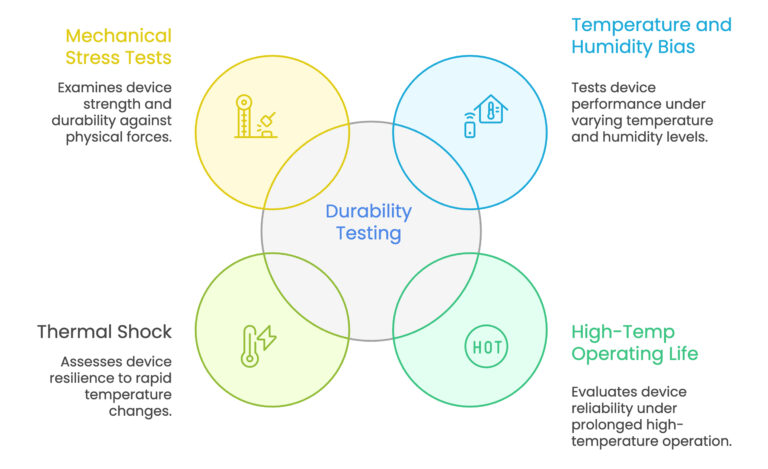
Reliability isn’t just about getting initial results; it’s about lasting performance. Environmental and stress tests place electronics under simulated operational extremes to evaluate performance limits and identify potential failure modes.
Typical stress tests include:
- Temperature and humidity bias: Examines device behavior in combined thermal and moisture conditions
- High-Temp Operating Life (HTOL): Determines how long electronics function at elevated temperatures
- Thermal shock: Simulates sudden temperature transitions
- Mechanical stress tests: Vibration, drop, and shock tests for ruggedness
These tests are essential to verify compliance with aerospace standards like DO-160 and automotive criteria like AEC-Q100. They help expose latent defects that could otherwise lead to field failures, which in mission-critical systems could be catastrophic.
Semiconductor Testing: Ensuring Chip-Level Reliability
At the heart of many aerospace and automotive electronics are semiconductor devices. These chips must perform reliably under harsh conditions and long lifecycles. That’s where comprehensive semiconductor testing comes into play.
From wafer sort to final package testing, semiconductor test flows assess electrical characteristics, functional correctness, and durability. Modern semiconductor testing includes:
- Wafer-level tests to screen defects early at extended temperatures
- Final package tests at extended temperatures to ensure each device meets specifications
- Reliability qualification using stress and environmental tests
- Failure analysis to diagnose and address root causes
This multi-layered approach means that when the chip finally enters a system, whether in a cockpit or a vehicle control unit, its behavior is predictable and dependable.
System-Level Validation: Testing Beyond Components
Once individual components are tested and qualified, the next challenge is ensuring the entire system works cohesively under real-world conditions. System-level testing evaluates interactions among subsystems, including hardware, firmware, and embedded software.
For example, real-time performance metrics like power consumption, signal integrity, and latency must be validated across diverse operating conditions. Sometimes, engineers create detailed simulations of actual usage environments to observe system behavior under stress. This step is vital for reducing field failures and gaining certification from regulatory agencies. For Eg : for an Aerospace requirement the chip is placed in a replica of its actual flight circuit (not just an ATE socket) to catch complex bugs that standard electrical tests miss, such as power management glitches or thermal throttling.
Quality systems and automated retest frameworks improve reliability confidence by enabling iterative verification and regression testing throughout development.
Safety and Regulatory Compliance
Meeting industry standards is non-negotiable. Aerospace and automotive electronics must comply with stringent regulations that govern safety, Electromagnetic Compatibility (EMC), environmental resilience, and operational reliability.
A well-structured reliability testing program also supports compliance audits and certification processes. By maintaining clear documentation of test plans, results, and corrective actions, engineering teams provide traceability that regulators demand.
This documentation often makes the difference between a smooth certification process and costly redesigns.
Automated Test Equipment (ATE) Modernization: Enhancing Efficiency in Electronics Testing
Tessolve: Engineering Reliability in Every Test
At Tessolve, we understand that reliability isn’t optional; it’s foundational. With over two decades of experience as a global engineering solutions provider, we deliver comprehensive testing and qualification services for the aerospace, automotive, and semiconductor industries. Our world-class infrastructure includes advanced test labs, environmental and stress testing facilities, and ATE platforms, enabling end-to-end validation from prototype to production.
Our expert teams specialize in test engineering, ATE testing, and semiconductor testing, backed by deep domain knowledge and meticulous quality processes. Whether you’re validating SoCs, ruggedized systems, or embedded platforms, Tessolve’s scalable and customizable solutions ensure your mission-critical electronics perform reliably in every environment.
Partner with Tessolve and leverage our proven methodologies, global testing footprint, and engineering excellence to accelerate your product’s journey from design to market, with confidence and reliability you can trust.
Frequently Asked Questions (FAQs)
1. Why is high-reliability testing critical for aerospace and automotive electronics?
It ensures electronics perform safely under extreme conditions, minimizing failure risks in life-critical and safety-sensitive applications.
2. How does environmental testing improve product reliability?
It simulates real-world stresses like heat, vibration, and humidity to uncover weaknesses before products reach deployment.
3. What role does automated testing play in mission-critical electronics?
Automation improves accuracy, consistency, and coverage while reducing human error across complex, high-volume testing scenarios.
4. When should reliability testing start in the product lifecycle?
Reliability testing should begin early in design phases and continue through validation, qualification, and production stages.
5. How do testing standards impact aerospace and automotive compliance?
They ensure products meet strict safety, performance, and regulatory requirements demanded by global aerospace and automotive authorities.


