


Digital transformation isn’t just happening in software; it’s happening inside physical products too. As modern devices become smarter, connected, and more adaptive, there’s a new pairing taking center stage: embedded systems and digital twins. Individually, each is powerful. But together, they unlock a new era of predictive intelligence, real-time optimization, and lifecycle automation.
This concept, cross-domain integration, is becoming a priority for engineering leaders, product architects, and OEMs looking to shorten development cycles, enhance reliability, and make systems more future-proof. Let’s explore how these two worlds converge and why this integration is shaping the future of connected products.
Why Embedded Systems and Digital Twins Complement Each Other
Embedded systems live at the edge, powering real-world functions like sensing, processing, controlling, and interfacing with the physical environment. Meanwhile, a digital twin acts as a dynamic software representation of that physical system, continuously updated with live operational data.
When these two domains connect, the results are impactful:
- Real products become continuously monitored and validated.
- Predictive insights replace static design assumptions.
- Performance improves automatically through feedback loops.
Simply put, a digital twin becomes smarter with real-world embedded telemetry, and embedded devices become smarter with simulated insights from their virtual counterpart.
How the Integration Works
Cross-domain integration typically follows a four-layer structure:
1. Device and Firmware Layer
This includes microcontrollers, SoCs, sensors, actuators, and firmware responsible for processing and transmitting meaningful telemetry.
Teams focusing on embedded system design ensure:
- Deterministic timing
- Low-level control
- Hardware-software alignment
- Efficient resource usage
2. Connectivity Layer
Protocols such as MQTT, CAN, Modbus, BLE, or 5G facilitate secure communication between hardware and cloud/twin platforms.
3. Data Processing & Modeling Layer
Here, digital twin engines apply simulation logic, including physical models, machine learning, or hybrid representations, using streamed embedded data.
4. Intelligence & Control Layer
Insights loop back to embedded devices, enabling:
- Adaptive calibration
- Smart energy optimization
- Predictive maintenance
- Automated parameter tuning
This bi-directional flow transforms products from static systems into evolving intelligent platforms.
Visualizing the Embedded System: Digital Twin Relationship
To better understand how embedded systems and digital twins work together through sensing, data exchange, and simulation loops, here’s a visual reference:
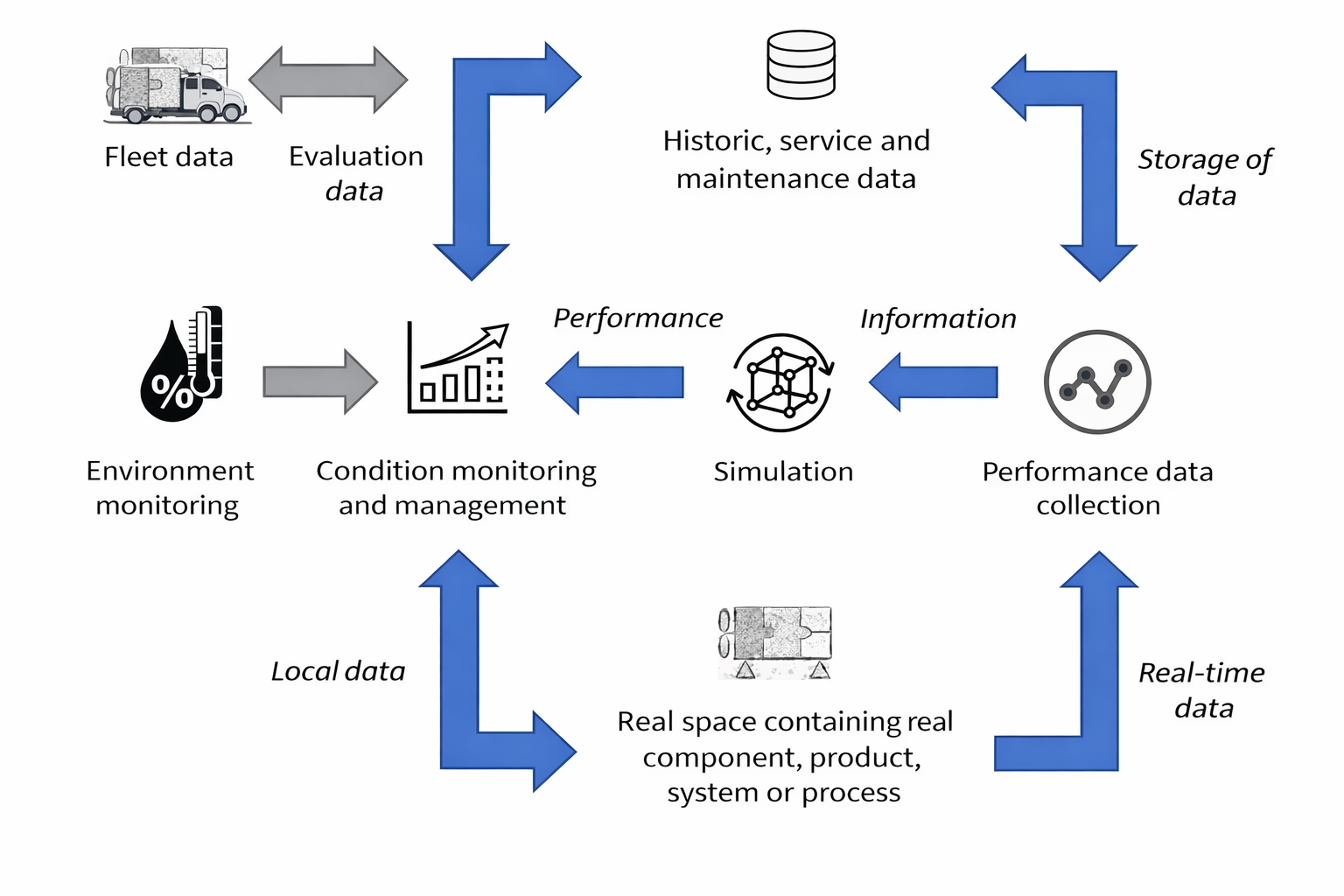
This diagram illustrates:
- How sensors, controllers, and embedded firmware collect real-time data.
- How telemetry is streamed into the digital twin for modeling and simulation.
- How insights, diagnostics, and optimization parameters flow back to the physical device.
- The continuous loop between physical execution and virtual validation.
By incorporating a visual reference such as this, readers can better grasp the bi-directional intelligence flow at the core of cross-domain integration, making the concept more intuitive and actionable.
Data Flow Between Physical Embedded Devices and Digital Twin Systems
Key Technical Pillars of Successful Integration
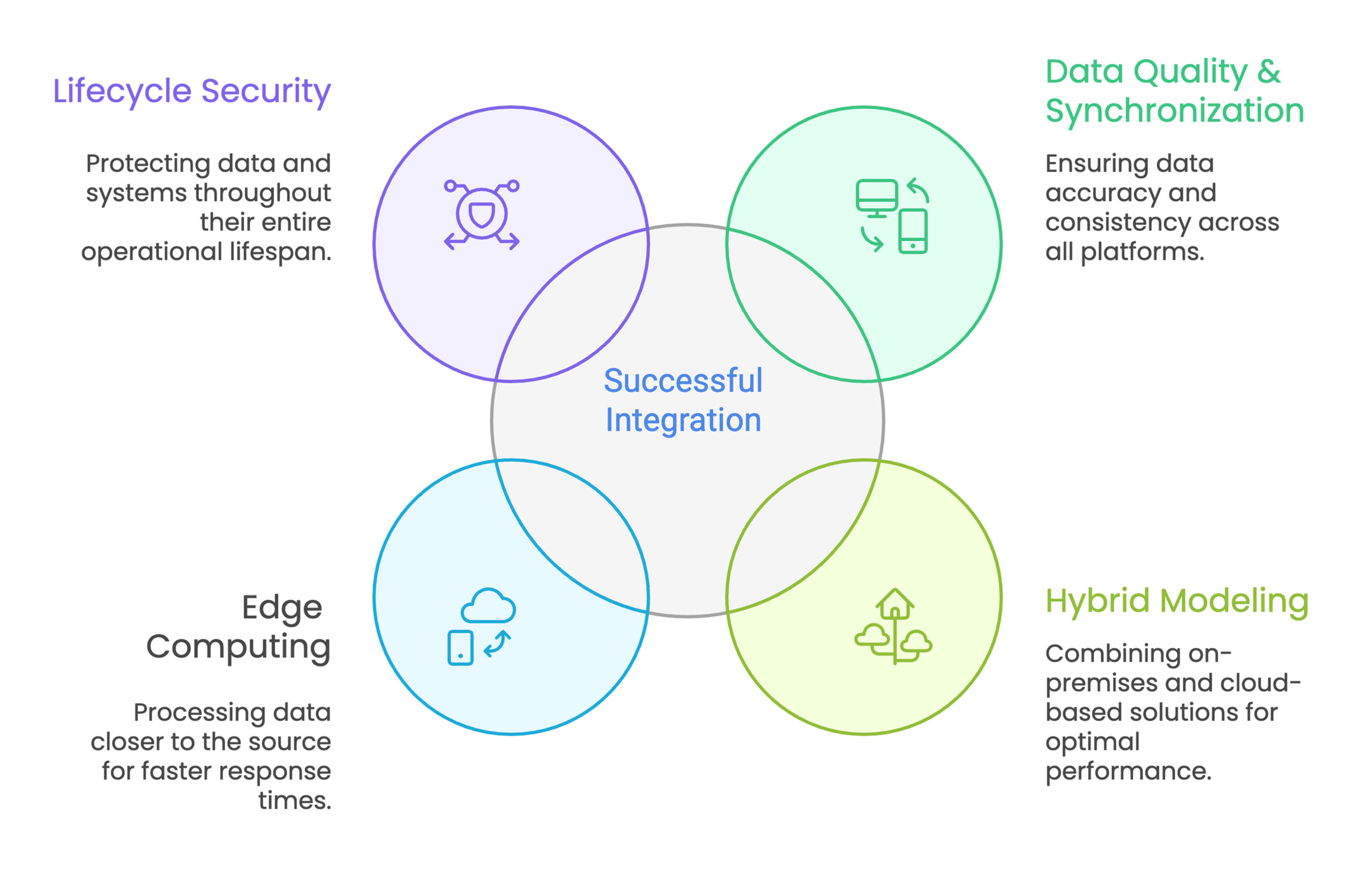
To make this synergy work, engineers typically optimize four main areas:
1. Data Quality & Synchronization
A twin is only useful if the data feeding it is reliable and timestamp-accurate. This requires embedded firmware that supports structured measurement frameworks.
2. Hybrid Modeling
Some scenarios are best simulated using physics equations, while others benefit from ML-adapted behavior. Combining both yields realistic, scalable twins.
3. Edge Computing for Efficiency
For latency-sensitive applications, embedded devices must preprocess data before sending it to the cloud. This approach reduces bandwidth load and improves responsiveness.
4. Lifecycle Security
Secure boot, encrypted communication, authenticated updates, and traceable device identity are mandatory, especially in critical systems like healthcare devices, EVs, or robotics.
Where This Integration Is Making an Impact
Organizations across multiple sectors are now pairing embedded intelligence with digital twins to close the gap between design intent and real-world operation.
Examples include:
- Smart factories optimizing machine uptime.
- Autonomous vehicles are improving control algorithms via simulation.
- Medical devices validating performance against patient-specific modeling.
- Energy systems predicting load, temperature, and mechanical stress.
These solutions often require not just smart firmware but a holistic ecosystem approach, something achievable only when teams consider the twin from the earliest stages of designing embedded system architectures.
Choosing the Right Engineering Strategy
Not all teams approach system-to-twin integration the same way, but common successful approaches include:
- Simulation-first development
- Hardware behavior is modeled before components are finalized.
- Hardware behavior is modeled before components are finalized.
- Continuous validation architecture
- Firmware changes are tested against digital twin scenarios before deployment.
- Fleet-aware intelligence
- Aggregate insight from many devices informs distributed behavior.
Engineering leaders increasingly recognize that modern products aren’t just hardware; they’re ecosystems. And ecosystems require planning frameworks, system thinking, and an advanced design solution mindset.
Common Challenges and How to Avoid Them
Even strong engineering teams encounter hurdles like:
- Missing telemetry structure
- Lack of version control for models
- Fragmented testing environments
- Cloud integration complexity
- Limited system visibility after deployment
These challenges become easier to manage when working with an experienced embedded system company that understands both hardware and simulation platforms, rather than treating them as isolated engineering silos.
Data Flow Between Physical Embedded Devices and Digital Twin Systems
Tessolve: Powering the Future of Embedded-Twin Integration
At Tessolve, we believe innovation happens when hardware intelligence meets virtual experimentation, and we help companies achieve exactly that. With expertise in embedded system design, firmware development, silicon validation, and turnkey engineering, we support organizations building smarter, connected ecosystems.
Our approach covers every layer, from silicon and PCB development to cloud telemetry design, testing automation, and digital twin enablement frameworks. As an experienced embedded system company, we also support system integration, compliance testing, and scalable prototyping.
Whether you’re refining an existing product or building next-generation IoT, automotive, industrial, or connected device solutions, Tessolve brings the engineering rigor, simulation capability, and advanced design solution expertise to bring your digital twin and embedded platform roadmap to life, efficiently and confidently.
Frequently Asked Questions (FAQs)
1. How do digital twins enhance the performance of embedded systems?
Digital twins provide real-time monitoring, predictive analytics, and optimization feedback, helping embedded systems perform smarter and adapt over time.
2. Is digital twin integration possible with legacy embedded devices?
Yes, with retrofit sensors, edge computing, and compatible communication protocols, older embedded systems can integrate with digital twins.
3. What skills are needed to build an embedded-to-digital twin ecosystem?
Teams need expertise in firmware, connectivity, simulation modeling, cloud platforms, and data synchronization for successful integration.
4. Why is cross-domain integration becoming important for product innovation?
It accelerates design cycles, improves reliability, reduces maintenance costs, and supports future-proof intelligent product ecosystems.


