

In-vehicle infotainment (IVI) has become one of the biggest differentiators in modern cars. What once used to be a basic stereo with navigation has evolved into a smart digital cockpit powered by advanced automotive systems. These platforms blend hardware, software, connectivity, and intelligence to deliver seamless entertainment, real-time information, and personalized driving experiences.
Today, the transformation of IVI is not happening on the surface; it’s happening deep inside the electronics that power the dashboard, shaped by innovations in embedded system design and intelligent architectures.
Why Embedded Systems Sit at the Heart of Modern Infotainment
Automotive embedded systemsare the silent engine behind every advanced infotainment feature you see today. They manage everything from display rendering and audio processing to connectivity, AI assistance, and seamless communication with vehicle sensors. Without these embedded controllers and high-performance SoCs, modern IVI systems wouldn’t be able to deliver personalized, responsive, and connected experiences. This foundational role is exactly why automakers are investing heavily in smarter embedded platforms that can evolve with software updates and future innovations.
Infotainment Market Growth Snapshot
To give you a quick visual understanding of how rapidly the in-vehicle infotainment space is expanding, here’s an excellent infographic showing global market size, key segments, and upcoming trends:
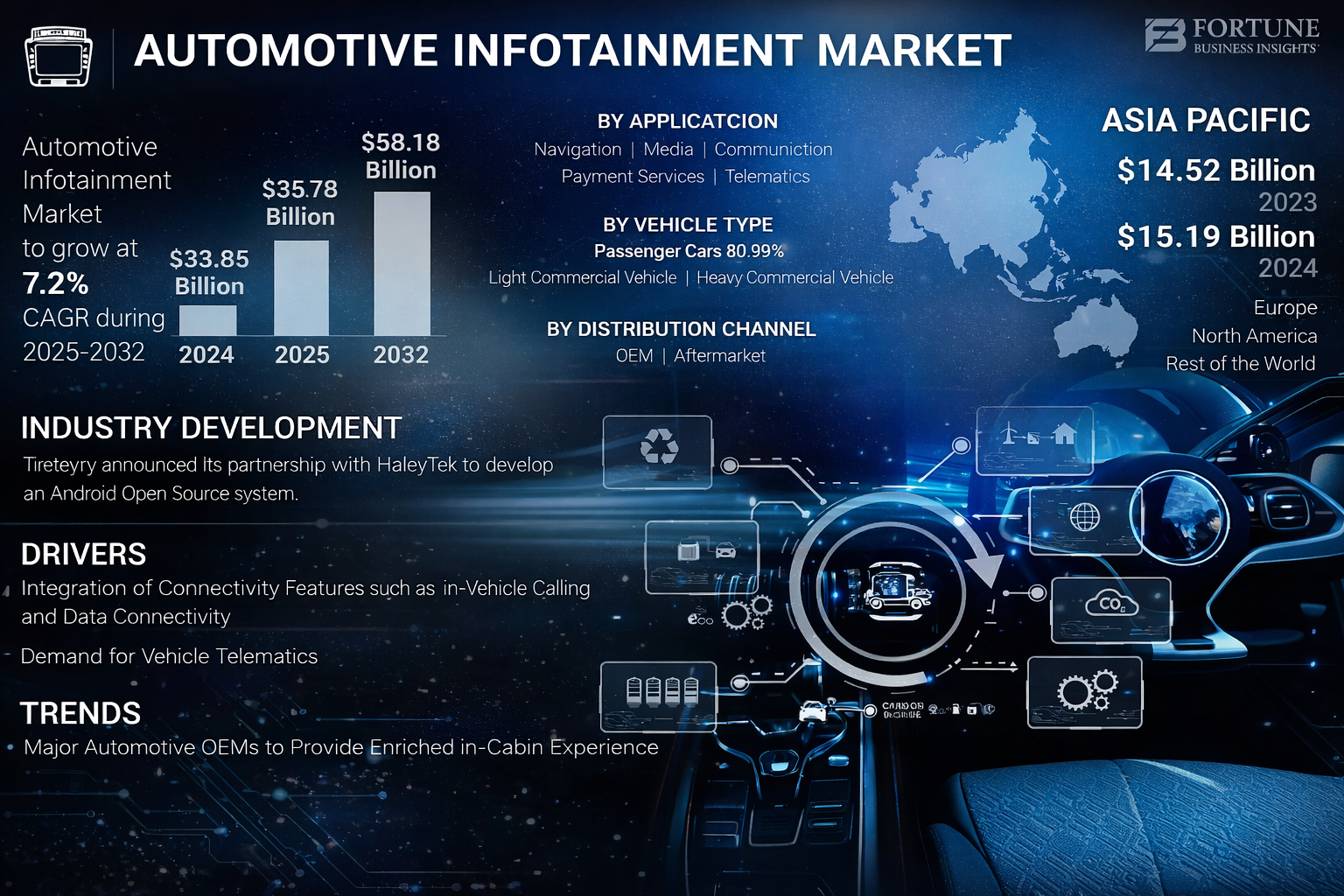
Automotive Infotainment Market Overview
Fortune Business Insights
This infographic highlights forecasted growth, major technology drivers, and adoption patterns, making it a perfect visual complement to the embedded-systems-driven transformations discussed in this blog.
The Core Innovations Embedded Systems Bring to Next-Gen Infotainment
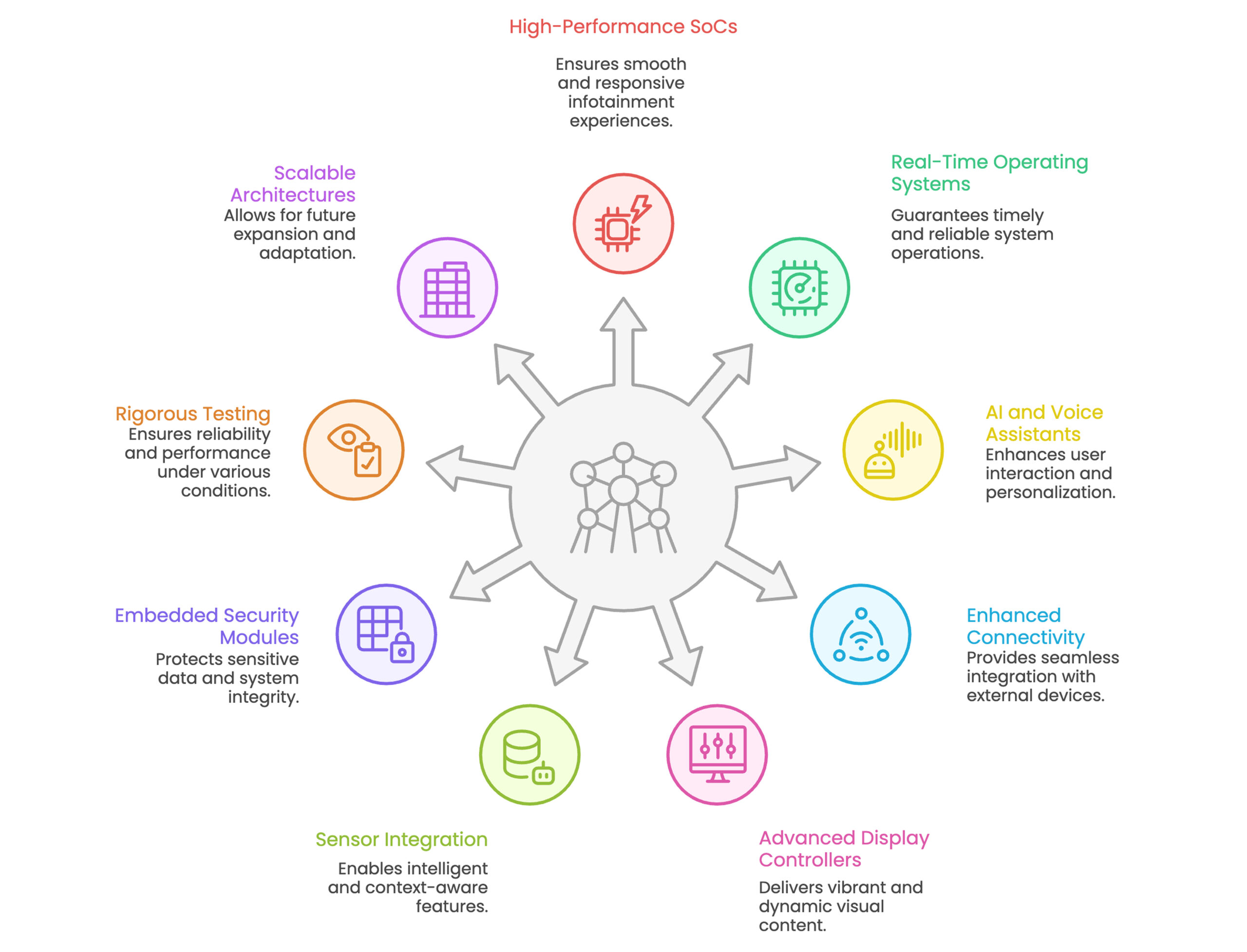
1. High-Performance SoCs Driving Next-Gen Cockpits
At the heart of modern IVI systems lie powerful automotive-grade SoCs. These chips combine CPU, GPU, DSP, and AI/ML accelerators to handle:
- HD multi-display dashboards
- 3D navigation rendering
- Voice assistant processing
- Real-time communication with vehicle sensors
Because of this shift, the head unit has turned into a smart, connected platform capable of running multiple applications in real time without lag. This evolution is backed by hardware innovation from every embedded system company pushing for better performance and long-term reliability.
2. Real-Time Operating Systems Creating Smooth User Experiences
IVI platforms rely on RTOS and hypervisors to keep safety-critical tasks separate from infotainment functions. This ensures:
- Faster boot times
- Smooth animations and touch responses
- Seamless transition between screens
- Stable performance under heavy loads
The result? A cockpit experience that feels premium, fluid, and uninterrupted, exactly what modern drivers expect.
3. Integration of AI and Voice Assistants
AI is reshaping how drivers interact with infotainment systems. With on-device intelligence, a car can:
- Understand natural voice commands
- Learn user preferences
- Suggest commonly driven routes
- Adjust in-cabin settings automatically
- Offer personalized media recommendations
This hands-free interaction significantly reduces distraction and makes daily driving more intuitive.
4. Enhanced Connectivity Through Embedded Communication Modules
Connectivity is now the backbone of smart infotainment. Modern modules integrate:
- 4G/5G modems
- Wi-Fi and Bluetooth
- V2X communication
- Cloud-sync capabilities
These modules enable:
- Live traffic updates
- Over-the-air (OTA) updates
- Smartphone mirroring
- Cloud-based driver profiles
This evolution is driven by advanced design solution frameworks that help manufacturers bring reliable connected features to production vehicles.
5. Advanced Display Controllers for Immersive Interfaces
Today’s cars include multiple display zones: clusters, center consoles, HUDs, passenger screens, and rear-seat entertainment. Modern controllers ensure:
-
- Instant rendering of the UI
- Smooth animations and transitions
- Synchronization across multiple screens
- High brightness and clarity
They also manage ADAS-related overlays like blind-spot warnings or speed alerts that must appear instantly.
6. Sensor Integration Creating Smarter Interactions
Infotainment systems now work closely with in-car sensors. These systems integrate data from:
- Cameras
- IMUs
- Steering/brake sensors
- Driver monitoring systems
- Cabin sensors
- This enables features such as:
- Gesture-based controls
- Driver fatigue alerts
- Adaptive audio
- Personalization of seats and mirrors
- ADAS visualizations
Sensor fusion gives the infotainment system deeper awareness of both the driver and the environment.
7. Embedded Security Modules Enhancing Data Safety
With increased connectivity, IVI cybersecurity is crucial. Modern security frameworks include:
- Secure boot
- Encrypted communication
- Hardware root of trust
- App sandboxing
- Multi-layer identity verification
These protections safeguard user data and prevent unauthorized manipulation of in-car systems.
8. Rigorous Testing Ensuring Reliability and Safety
Behind every smooth infotainment experience lies rigorous testing. Automotive electronics must pass structural, functional, performance, and environmental validation.
Engineering teams refine hardware-software behavior throughout development, and continuous testing ensures consistent performance across all units during mass production.
This is further strengthened by validation tools supported by every leading embedded system company that ensure reliability at scale.
9. Scalable Embedded Architectures Enabling Future Upgrades
Modern infotainment platforms are built for continuity and future expansion. Scalable architectures support:
- Containerized applications
- Modular software updates
- Cloud-linked personalization
- Compatibility with upcoming features
- This keeps the IVI experience fresh, even years after purchase.
10. How Embedded Systems Support Large-Scale Production
As production volumes grow, reliability becomes a critical factor. Advanced methodologies ensure:
- Consistent hardware behavior
- Better system compatibility
- Higher stability during long-term usage
- Fewer failures during mass deployment]
Innovations in advanced design solution models help manufacturers maintain uniformity across thousands of units, even under extreme automotive conditions.
Embedded Systems in Autonomous Vehicles: Architecture, Safety & Validation
Tessolve: Engineering the Future of In-Vehicle Infotainment
At Tessolve, we help global automotive brands build next-generation infotainment systems with confidence. Our strength lies in offering complete silicon-to-system expertise, from semiconductor design, DFT, and embedded engineering to ATE-based validation, characterization, and reliability testing.
With deep experience in automotive SoCs, multimedia pipelines, connectivity stacks, and safety certification, we support OEMs and Tier-1 suppliers in designing embedded system architectures that are high-performance, secure, and scalable. Our engineering frameworks and global labs ensure faster development cycles and dependable mass production.
If you’re developing the future of in-vehicle infotainment, Tessolve is here to power your journey with end-to-end engineering excellence.
Frequently Asked Questions
How do automotive embedded systems improve in-vehicle infotainment performance?
Embedded systems enhance speed, responsiveness, connectivity, and overall user experience by managing displays, audio, navigation, and real-time processing intelligently.
Why are modern infotainment systems becoming more software-driven?
Software-driven platforms allow faster updates, new features, better personalization, and long-term scalability without changing vehicle hardware.
What role does AI play in advanced infotainment systems?
AI enables natural voice control, personalized recommendations, real-time insights, and more intuitive interactions between the driver and the vehicle.
How important is connectivity in today’s infotainment platforms?
Connectivity powers live navigation, OTA updates, smartphone integration, cloud profiles, streaming services, and a continuously evolving infotainment experience.


